Golden State HR https://goldenstatehr.com/ California HR Company Thu, 02 Oct 2025 17:13:30 +0000 en-US hourly 1 https://wordpress.org/?v=7.1 https://goldenstatehr.com/wp-content/uploads/2024/10/cropped-CA-32x32.png Golden State HR https://goldenstatehr.com/ 32 32 Government Shutdowns in California: How SMBs Can Respond https://goldenstatehr.com/government-shutdowns-in-california-how-smbs-can-respond/?utm_source=rss&utm_medium=rss&utm_campaign=government-shutdowns-in-california-how-smbs-can-respond Thu, 02 Oct 2025 17:11:50 +0000 https://goldenstatehr.com/?p=389 When Uncle Sam decides to take a timeout, California businesses feel the pinch fast. Government shutdowns aren't just a DC drama: they ripple through the Golden State's economy, hitting small and midsize businesses where it hurts most: cash flow, contracts, and workforce planning. If you're running a business with employees in California, you've probably wondered […]

The post Government Shutdowns in California: How SMBs Can Respond appeared first on Golden State HR.

]]>

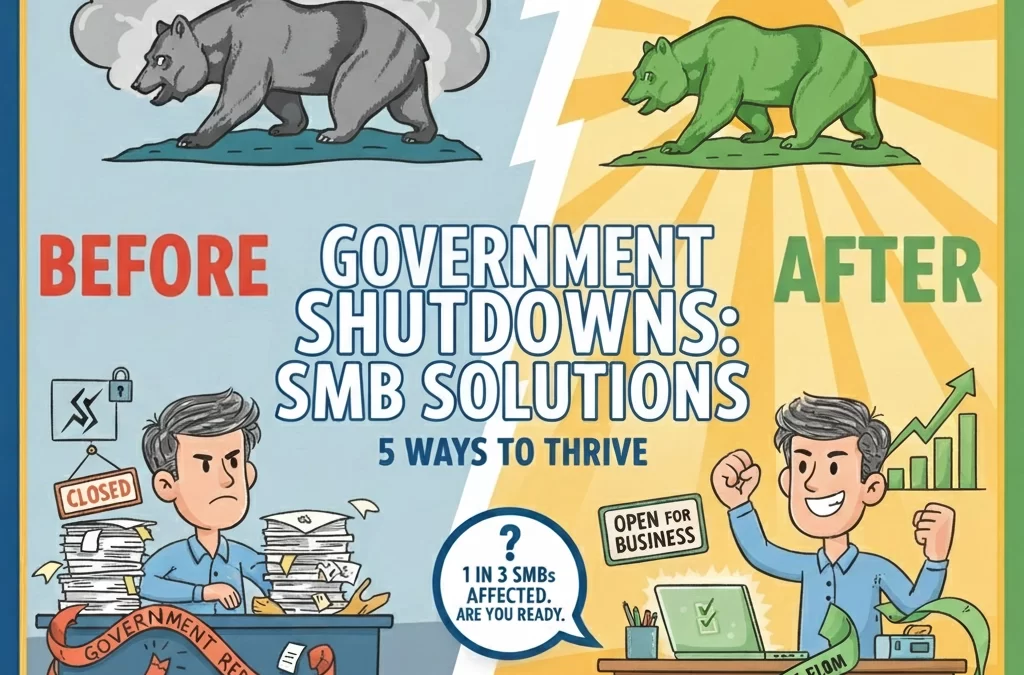
When Uncle Sam decides to take a timeout, California businesses feel the pinch fast. Government shutdowns aren't just a DC drama: they ripple through the Golden State's economy, hitting small and midsize businesses where it hurts most: cash flow, contracts, and workforce planning.

If you're running a business with employees in California, you've probably wondered what happens when federal operations grind to a halt. Do you keep paying people? Can you use state programs to bridge the gap? What's the difference between a furlough and a layoff anyway?

Let's break down your options, from California's Work Sharing program to the realities of workforce reductions. Because when the government shuts down, your business doesn't have to.

What Government Shutdowns Actually Mean for Your Business

Government shutdowns create a domino effect that hits California businesses harder than most realize. The immediate impact? $100 million per day in lost SBA loan financing nationwide, with California businesses losing access to critical federal contracts, grants, and lending programs.

image_1

For businesses that rely on federal contracts, the math is brutal. You can't get new contracts awarded, existing ones can't be modified, and payment processing slows to a crawl. Even if you're not a direct federal contractor, the economic ripple effects touch everyone: from reduced consumer spending to delayed vendor payments.

The last major shutdown in 2018-2019 lasted 35 days and shrank economic output by $11 billion. California's diverse economy means these impacts show up everywhere: tourism drops when national parks close, federal employees stop spending at local businesses, and the uncertainty makes everyone tighten their belts.

The California Work Sharing Program: Your Secret Weapon

Here's something most California employers don't know about: the state's Work Sharing Program (also called Short-Time Compensation). It's like unemployment insurance's smarter cousin: and it could save your business during a shutdown.

What It Is: Instead of laying off workers, you reduce everyone's hours by 10-60%, and the state pays unemployment benefits to cover part of their lost wages. Your employees keep their jobs and benefits, you retain your trained workforce, and everyone rides out the storm together.

When to Use It: Perfect for government shutdowns when you expect business to bounce back. If federal contracts are frozen or customer spending drops temporarily, Work Sharing lets you cut costs without cutting people.

How It Works:

  • You apply through EDD (Employment Development Department)
  • Employees work reduced hours but keep their health benefits
  • The state pays unemployment benefits proportional to their hour reduction
  • You avoid the costs of layoffs, hiring, and retraining

The Catch: You need EDD approval before implementing hour reductions, and it takes 2-3 weeks to process applications. Smart employers apply for Work Sharing authorization before they need it, so they're ready when shutdowns happen.

Furloughs: More Than Just Fancy Layoffs

Let's clear up the confusion: a furlough isn't just a polite way to say "layoff." In California, furloughs are temporary, unpaid leaves with the expectation employees will return. Think of it as hitting the pause button instead of the stop button.

What Makes a Furlough Legal in California:

  • Must be temporary (as in, less than a pay period temporary) and have a defined end date
  • Employee keeps their job title and benefits (usually)
  • Clear communication about return-to-work expectations
  • No work performed during furlough period (this is crucial)

image_2

Pros:

  • Employees can file for unemployment benefits
  • You retain trained staff and avoid rehiring costs
  • Easier to restart operations when business returns
  • Lower administrative burden than layoffs

Cons:

  • You still pay benefit costs for furloughed employees
  • Risk of losing top talent to competitors
  • Potential legal issues if employees work during furlough
  • May still trigger WARN Act requirements for large furloughs

California-Specific Rules: Unlike some states, California treats furloughs seriously. If you ask furloughed employees to check emails, attend meetings, or do any work, you've violated wage and hour laws. Keep it clean: furloughed means furloughed.  And if it goes on for more than that ONE pay period, you're really looking at a layoff.

Layoffs: When You Need the Nuclear Option

Sometimes Work Sharing and furloughs won't cut it. When government shutdowns stretch on or fundamentally change your business model, layoffs become the harsh reality. California's employment-at-will doctrine gives you flexibility, but several laws add complexity.

WARN Act Considerations:
If you're planning to lay off 50+ employees at a single site, or reduce hours by 50%+ for 50+ employees, federal WARN Act kicks in. California's mini-WARN Act (AB 1400) adds state-level requirements. You need 60 days' written notice to employees and local officials.

Practical Layoff Steps:

  1. Calculate WARN thresholds carefully: include furloughs in your count
  2. Document business justification (government shutdown impacts, lost revenue)
  3. Review employee contracts for severance obligations
  4. Plan final pay timing: California requires immediate payment on termination
  5. Handle benefits properly: COBRA notifications, unused PTO payouts

image_3

California Gotchas:

  • Final paychecks are due immediately, not next payday
  • Unused vacation time must be paid out (but not sick time)
  • Mass layoffs trigger additional state notification requirements
  • Certain employees may have stronger protections (union members, recent parents)

Building Your Shutdown Response Plan

The best time to plan for a government shutdown is when there isn't one. Here's your practical prep checklist:

Financial Preparation:

  • Build 60-90 days operating cash reserves
  • Diversify revenue streams beyond federal dependence
  • Establish relationships with private lenders
  • Apply for Work Sharing authorization before you need it

Legal Documentation:

  • Review employment contracts for shutdown clauses
  • Prepare WARN Act notification templates
  • Document your federal contract exposure
  • Update employee handbook with shutdown policies

Communication Strategy:

  • Develop clear messaging for different scenarios
  • Identify key employees to retain during reductions
  • Plan regular updates for remaining staff
  • Coordinate with local business networks

Operational Contingencies:

  • Identify essential vs. non-essential functions
  • Cross-train employees for multiple roles
  • Maintain vendor relationships through uncertainty
  • Track shutdown impacts for potential future claims

The reality is that government shutdowns will happen again. California businesses that prepare now will navigate the next one with less stress, lower costs, and stronger employee relationships.

The Bottom Line

Government shutdowns test every aspect of your business operations, from cash flow to workforce management. But with the right tools: California's Work Sharing program, proper furlough implementation, or strategic layoffs: you can weather the storm without destroying what you've built.

The key is planning ahead and understanding your options before you need them. Because when Washington starts playing budget chicken again, you'll be ready to protect your business and your people.

Need help navigating California's employment laws during uncertain times? Golden State HR specializes in helping small and midsize businesses build resilient workforce strategies. Don't wait until the next shutdown to get your plan in place.

The post Government Shutdowns in California: How SMBs Can Respond appeared first on Golden State HR.

]]>
Meet Our AI Team: 6 AI Employees Making Life Easier for Small Businesses https://goldenstatehr.com/meet-our-ai-team-6-ai-employees-making-life-easier-for-small-businesses/?utm_source=rss&utm_medium=rss&utm_campaign=meet-our-ai-team-6-ai-employees-making-life-easier-for-small-businesses Tue, 23 Sep 2025 00:40:21 +0000 https://goldenstatehr.com/?p=332 Running a small business in California means wearing about fifteen different hats on any given day. One minute you’re answering customer emails, the next you’re trying to figure out social media, then you’re scrambling to follow up with leads while also making sure your blog doesn’t look like it was last updated in 2019. Sound […]

The post Meet Our AI Team: 6 AI Employees Making Life Easier for Small Businesses appeared first on Golden State HR.

]]>
Running a small business in California means wearing about fifteen different hats on any given day. One minute you’re answering customer emails, the next you’re trying to figure out social media, then you’re scrambling to follow up with leads while also making sure your blog doesn’t look like it was last updated in 2019.

Sound familiar? You’re not alone. Most small business owners and solo entrepreneurs know they should be handling tasks like content creation, lead generation, and customer support consistently, but there just aren’t enough hours in the day.  And if you’re like the majority of Americans, you’ve heard about big companies using AI to be more efficient, but you don’t know where to start.

That’s where our Marblism-powered team of AI employees comes in. Think of them as your digital workforce that never calls in sick, doesn’t need vacation time, and works around the clock for just $39 a month. Let’s meet the team that’s helping California businesses get their time back.

Eva: Your AI Executive Assistant Who Actually Gets Things Done

Meet Eva, the executive assistant who makes you look like you have your life together. She’s the one handling your email chaos, scheduling your meetings, and making sure you actually follow up on important conversations.

Here’s what Eva handles daily:

  • Email triage and prioritization: Eva sorts through your inbox and flags the urgent stuff while filtering out the noise
  • Calendar management: She coordinates meetings, sends reminders, and makes sure you’re not double-booking yourself
  • Professional reply drafts: Eva crafts responses that sound like you on your best day
  • Follow-up reminders: Never let another important conversation slip through the cracks

Real-world example: Remember that potential client who emailed you last Tuesday? Eva already drafted a follow-up, scheduled a reminder for you to send it, and added their contact info to your CRM. Meanwhile, you were busy putting out fires somewhere else.

The stress-saver: No more lying awake at 2 AM wondering if you forgot to respond to someone important.

Sonny: Your Social Media Manager Who Never Runs Out of Ideas

Social media is one of those things every business owner knows they should be doing, but honestly, who has time to come up with clever captions and hashtags all day?

Sonny takes care of:

  • Content planning and creation: Fresh post ideas that actually align with your brand
  • Multi-platform posting: LinkedIn, Instagram, Twitter, Sonny keeps them all active
  • Engagement tracking: Monitoring comments and interactions so nothing falls through the cracks
  • Campaign development: Strategic content that moves your business goals forward

Real-world example: While you’re dealing with a challenging client call, Sonny is posting that case study you mentioned wanting to share three weeks ago. Your LinkedIn followers see consistent, professional content, and you didn’t have to think about it once.

The time-saver: Your social media presence stays active and professional, even during your busiest weeks.

Penny: Your Content Writer Who Makes You Look Like a Marketing Genius

Penny handles all the blog posts, SEO content, and written materials that keep your website fresh and your Google rankings happy. While you’re running your business, Penny is making sure potential customers can actually find you online.

Here’s what she does for you:

  • SEO-optimized blog posts: Content that ranks on Google and actually helps your customers
  • Website copy updates: Keeping your site current and conversion-focused
  • Content research and planning: Figures out what your audience wants to read about
  • Publishing and distribution: Your content goes live automatically: no more draft folders full of “someday” posts

Real-world example: This blog post! And clients are using Penny to draft and schedule posts for months ahead of time.

The stress-reliever: Your website stays current and helpful without you having to carve out hours for writing.

Stan: Your Sales Rep Who Never Gets Discouraged

Stan is your persistent, polite sales development representative who handles the lead generation and outreach that most small business owners either avoid or do inconsistently.

Stan’s daily tasks include:

  • Lead research and qualification: Finding potential customers who actually need your services
  • Cold email outreach: Professional, personalized messages that get responses
  • Follow-up sequences: Staying in touch without being pushy
  • CRM management: Keeping track of every interaction and opportunity

Real-world example: While you’re delivering services to current clients, Stan is reaching out to five qualified prospects, following up with three warm leads from last week, and updating your pipeline with detailed notes about each conversation, EVERY DAY.

The game-changer: Your sales funnel stays active even when you’re buried in client work.

Linda: Your Legal Assistant Who Keeps You Compliant

California business compliance isn’t exactly light reading, but Linda makes sure you’re covered on the legal and administrative side without needing a law degree.

Linda handles:

  • Contract reviews and summaries: Plain-English explanations of legal documents
  • Compliance tracking: Staying current with California employment law changes
  • Document organization: Everything filed and findable when you need it
  • Basic legal research: Quick answers to common business law questions

Real-world example: That vendor contract you’ve been putting off reviewing? Linda already highlighted the key terms, flagged potential issues, and summarized the important points in language you actually understand.

The peace of mind: Sleep better knowing your legal bases are covered and your documents are organized.

Rachel: Your Receptionist Who’s Always Professional

Rachel is your front-line customer service representative who makes sure every customer interaction reflects well on your business, even when you’re unavailable.

Rachel manages:

  • Phone answering and message routing: Professional greetings and accurate message-taking
  • Customer inquiry responses: Quick, helpful answers to common questions
  • Appointment scheduling: Coordinating meetings without the back-and-forth email chains
  • Customer follow-up: Making sure every customer feels heard and valued

Real-world example: A potential customer calls at 5:30 PM asking about your services. Rachel answers professionally, captures their information, answers their basic questions, and schedules a call with you for the next day: all while you’re at your kid’s soccer game.

The reputation builder: Every customer interaction is handled promptly and professionally, building trust in your brand.

The Bottom Line: AI Employees Complement Your Human Team

These six AI employees aren’t here to replace human workers: they’re handling the repetitive, time-consuming tasks that prevent you and your team from focusing on what really matters: strategy, relationship-building, and growing your business.

For just $39 a month, you get unlimited access to this entire team. Compare that to hiring even one part-time virtual assistant, and the value becomes pretty obvious. More importantly, you get your evenings and weekends back without sacrificing the quality of your business operations.

The setup takes less than 30 minutes: you describe your business, connect your existing tools, and your AI team gets to work. They learn from your feedback and can operate with as much or as little oversight as you prefer.

Ready to meet your new team? Your business deserves support that works as hard as you do, without the overhead or management complexity of traditional hiring.

Want to learn more about how AI employees can transform your small business operations? Visit Golden State HR to discover more ways technology can streamline your HR and business processes.

The post Meet Our AI Team: 6 AI Employees Making Life Easier for Small Businesses appeared first on Golden State HR.

]]>
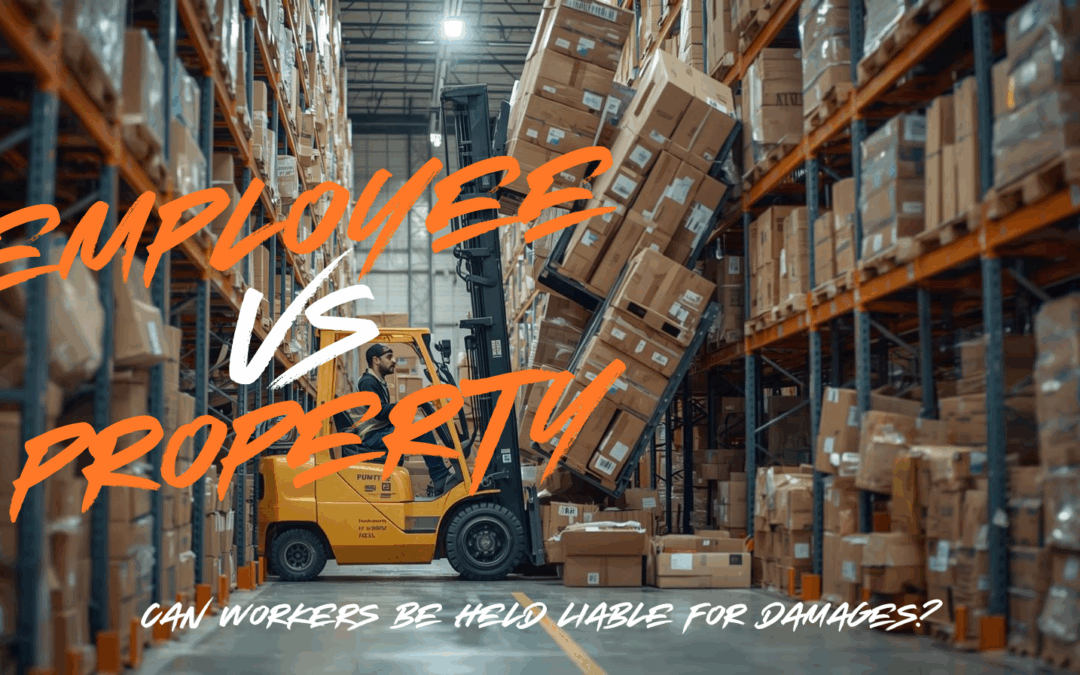
Employee Property Damage: Can Workers Be Held Liable in California? https://goldenstatehr.com/employee-property-damage-can-workers-be-held-liable-in-california/?utm_source=rss&utm_medium=rss&utm_campaign=employee-property-damage-can-workers-be-held-liable-in-california Mon, 15 Sep 2025 19:37:01 +0000 https://goldenstatehr.com/?p=310 Picture this: Your warehouse employee accidentally backs the forklift into a support beam, causing $3,000 in damage. Your office manager spills coffee on the new laptop, frying the motherboard. Your delivery driver clips a mailbox while backing out of a tight driveway. Now what? Can you make them pay for it? If you're running a […]

The post Employee Property Damage: Can Workers Be Held Liable in California? appeared first on Golden State HR.

]]>

Picture this: Your warehouse employee accidentally backs the forklift into a support beam, causing $3,000 in damage. Your office manager spills coffee on the new laptop, frying the motherboard. Your delivery driver clips a mailbox while backing out of a tight driveway.

Now what? Can you make them pay for it?

If you're running a California small business, this question keeps many owners awake at night. The short answer? Sometimes, but it's way more complicated than you think, and the law heavily favors protecting workers from excessive financial liability.

Let's break down when employees can be held liable for property damage in California, when they can't, and how to handle these situations without landing yourself in legal hot water.

When Employees Are Typically NOT Liable

Here's the reality check most California employers need to hear: accidents happen, and they're usually your problem, not theirs.

Under California law, employees are generally protected from liability when damage occurs during normal work activities. If your warehouse worker drops a box and breaks something, or your admin accidentally deletes an important file, that's considered part of doing business, not grounds for making them pay.

The key legal principle here is that accidental damage without negligence rarely results in employee liability. California courts have consistently held that ordinary workplace mishaps fall under the employer's responsibility, especially when employees are acting within the scope of their job duties.

image_1

Think about it this way: you hired them to do a job, provided the training (hopefully), and put them in that situation. If they're genuinely trying to do their work and something goes wrong, that's on you as the business owner.

This protection is even stronger for lower-wage workers. California's employment laws recognize that requiring a minimum-wage employee to pay for a $2,000 mistake could create severe financial hardship, and that's not something the state takes lightly.

Common scenarios where employees typically aren't liable:

  • Accidental drops, spills, or breakage during normal work
  • Equipment malfunctions due to wear and tear
  • Minor vehicle accidents during work-related driving
  • Computer errors or data loss from normal use
  • Damage from following standard procedures

When Employee Liability May Apply

Now, let's talk about the exceptions, because yes, there are times when employees can be held financially responsible for property damage in California.

Gross negligence is the big one. This goes beyond simple mistakes into "what were you thinking?" territory. If your employee ignores safety protocols, uses equipment they're not trained on, or takes actions that any reasonable person would know could cause damage, liability starts to shift.

Intentional damage is obvious: if someone deliberately destroys company property out of anger or spite, they're absolutely on the hook. But here's where it gets tricky: you need to prove intent, which isn't always as clear-cut as it seems.

Violation of clear company policies is another scenario where liability may apply. If you have written policies about equipment use, vehicle operation, or safety procedures, and an employee deliberately ignores them, resulting in damage, you may have grounds for recovery.

image_2

Examples where liability might stick:

  • Using company vehicles for unauthorized personal trips that result in accidents
  • Operating machinery under the influence of drugs or alcohol
  • Deliberately ignoring safety lockout procedures
  • Using equipment for purposes explicitly prohibited in training
  • Destroying property during workplace altercations

But here's the catch: even in these situations, your ability to actually recover costs from employees is limited by California's wage and hour laws, which we'll cover next.

How Companies Should Respond: The Legal Minefield

When property damage happens, your response can make or break your legal position. Handle it wrong, and you could face wrongful termination claims, wage and hour violations, or discrimination lawsuits.

First, investigate before you react. Document everything: photos of damage, witness statements, equipment logs, training records. You need a clear picture of what happened before you decide on consequences.

Second, understand your wage deduction limitations. This is where many California employers get into trouble. Under both state and federal law, you cannot simply dock an employee's paycheck for property damage without meeting strict requirements.

The Fair Labor Standards Act (FLSA) prohibits any deductions that would drop an employee's pay below minimum wage. California goes even further: Labor Code Section 221 generally prohibits wage deductions unless specifically authorized by law or with explicit written employee consent.

image_3

Key legal requirements for wage deductions in California:

  • Must be explicitly permitted in a written employment contract
  • Cannot reduce pay below minimum wage
  • Must be related to the employee's benefit (not just employer recovery)
  • Require clear documentation of the damage and employee responsibility

Your response playbook should include:

  1. Immediate documentation of the incident and damage
  2. Investigation into circumstances and employee culpability
  3. Review of employment contracts for damage clauses
  4. Consultation with legal counsel before pursuing financial recovery
  5. Consideration of insurance coverage before pursuing employee liability

Remember: California employment penalties can be severe if you violate wage and hour laws while trying to recover property damage costs.

Prevention: Protecting Your Business AND Your Team

The smartest approach? Prevent these situations before they happen and create clear policies that protect both your business and your employees.

Clear policies are your first line of defense. Your employee handbook should explicitly outline expectations for equipment use, vehicle operation, and care of company property. But don't just write policies: train on them, document the training, and enforce them consistently.

Insurance should be your primary protection, not employee liability. Commercial general liability, workers' compensation, and commercial auto insurance should cover most property damage scenarios. It's far more cost-effective than trying to recover costs from employees who may not have the financial resources to pay anyway.

image_4

Smart prevention strategies include:

  • Comprehensive training programs with documented completion
  • Regular equipment maintenance to prevent malfunctions
  • Clear consequences for policy violations (discipline, not necessarily financial liability)
  • Incident reporting systems that encourage honesty over blame
  • Insurance reviews to ensure adequate coverage for your specific risks

Create a culture of accountability without fear. Employees who are terrified of being financially responsible for every mistake are more likely to hide problems, lie about incidents, or quit rather than face potential liability. That's not the workplace culture you want.

Consider implementing progressive discipline policies that focus on correcting behavior rather than financial punishment. Sometimes a written warning is more effective (and legally safer) than trying to garnner wages.

The Bottom Line

Employee property damage liability in California is a complex area where employment law, wage and hour regulations, and practical business needs collide. While employees can sometimes be held liable for property damage, the circumstances are limited, the legal requirements are strict, and the practical recovery is often difficult.

Your best strategy? Focus on prevention, maintain comprehensive insurance coverage, and handle incidents with clear policies and legal compliance. When damage does occur, investigate thoroughly, document everything, and consult with employment law experts before pursuing financial recovery from employees.

The cost of getting this wrong: wrongful termination lawsuits, wage and hour violations, or regulatory penalties: often exceeds the value of the damaged property. Smart California employers protect their businesses through insurance and prevention, not by making their employees pay for every workplace accident.

Need help creating bulletproof policies for property damage and employee liability? Our HR experts help California businesses navigate these complex employment law issues every day. Don't let a property damage incident turn into a costly legal battle.

The post Employee Property Damage: Can Workers Be Held Liable in California? appeared first on Golden State HR.

]]>
What’s Up With the Job Market? https://goldenstatehr.com/whats-up-with-the-job-market/?utm_source=rss&utm_medium=rss&utm_campaign=whats-up-with-the-job-market Mon, 08 Sep 2025 14:00:27 +0000 https://goldenstatehr.com/?p=302 The August 2025 jobs report just dropped, and if you’re running a California business with 25-250 employees, there’s some stuff you need to know. The national picture? Pretty underwhelming. But for California SMBs, there are some real opportunities buried in these numbers if you know where to look. Let’s cut through the economist-speak and talk […]

The post What’s Up With the Job Market? appeared first on Golden State HR.

]]>
The August 2025 jobs report just dropped, and if you’re running a California business with 25-250 employees, there’s some stuff you need to know. The national picture? Pretty underwhelming. But for California SMBs, there are some real opportunities buried in these numbers if you know where to look.

Let’s cut through the economist-speak and talk about what this actually means for your hiring plans, your budget, and your Q4 strategy.

The Big Picture: Job Growth Is Basically Stalled

Here’s the headline that should grab your attention: national nonfarm payroll employment grew by only 22,000 jobs in August. That’s not a typo. Twenty-two thousand jobs across the entire United States. To put that in perspective, California alone usually adds more jobs than that in a decent month.

People are dropping out of the job market

This sluggish growth isn’t new, we’ve been stuck in this pattern since April. The unemployment rate held steady at 4.3%, but here’s what the headlines won’t tell you: both labor force participation and the employment-population ratio have actually dipped year-over-year. Translation? People are dropping out of the job search altogether.

For California SMBs, this creates an interesting dynamic. While the national picture looks grim, California’s economy has been showing more resilience. That means you might be competing with fewer out-of-state opportunities for talent, but you’re also dealing with a labor market that’s still pretty tight locally.

Where the Jobs Actually Went (And Didn’t Go)

Let’s talk sector by sector, because this is where things get interesting for your business planning:

Health Care and Social Assistance: The clear winner. These sectors continue adding jobs at a steady pace. If you’re in healthcare services, behavioral health, or eldercare, you’re riding the wave. If you’re not, pay attention to this trend, it’s not slowing down anytime soon.

Manufacturing and Wholesale Trade: Ouch. Both sectors lost jobs in August, continuing a trend that started earlier this year. If you’re in manufacturing in California, you already know this. The question is: are you adapting your workforce strategy accordingly? If not, how long do you think ‘wait and see’ will work?

Professional Services, Retail, and Leisure: Flat as a pancake. These sectors aren’t gaining or losing significantly, which means they’re treading water. For many California SMBs, this is your reality: stable but not growing.

The takeaway? Sector matters more than ever. Your hiring challenges and opportunities depend heavily on which industry you’re in, not just how well you’re managed.

image_3

Wage Growth: The Double-Edged Sword

We have some good news and some bad news on wages:

The good news is that the average salary increase for workers who changed jobs (went to work for another company) is lower than salary gains for workers who stayed in their role, according to the Atlanta Fed and Fast Company (https://www.fastcompany.com/91312559/changing-jobs-no-longer-pays-and-might-not-for-a-while-thanks-to-tariffs).  That means that the incentive for workers to quit isn’t as strong as it used to be.

But that bad news is that average hourly earnings grew to $41.07! Which is up 3.79% year-over-year. Which means that workers who stay, are expected their loyalty to be rewarded.

Let’s do some quick California math: if you’ve got 100 employees averaging $25/hour (which is conservative for most of the state), that 3.79% increase means an additional $197,000 in annual payroll costs (before taxes!). Can your bottom line handle that?

What this means for your Q4 planning:

Don’t get caught off guard by wage pressure. If you’re planning any significant hiring for 2026, budget for wage increases now. And if you’re thinking about retention bonuses or raises, factor in that your competitors are dealing with the same pressure.

California-Specific Opportunities for SMBs

While the national job market is sputtering, California presents some unique opportunities for savvy SMBs:

Government Sector Stability: California’s state and local government employment has remained more stable than in other states. While this might not directly affect private sector SMBs, it does mean there’s less competition for skilled workers from the public sector.

Tech Sector Adjustment: The tech industry’s continued rightsizing means there are experienced professionals available who might not have been on the market even just a few months ago. For SMBs in adjacent industries: think marketing services, business consulting, or specialized manufacturing: this could be your chance to upgrade your talent.

Remote Work Reality: California businesses that have embraced flexible work arrangements are competing in a broader talent pool. The slow national job growth means you might be able to attract talent from other states without the relocation costs. I know remote work isn’t right for everyone, but have you looked at each role for the opportunity?

Recruiting in a Slow-Growth Market: Your Action Plan

The August jobs report reveals a market where being strategic beats being desperate. Here’s what smart California SMBs are doing right now:

Focus on Quality Over Speed: With job growth stalled, you have more time to find the right candidate rather than just any candidate. Use this to your advantage: be pickier, not faster.

Leverage Benefits Differentiation: In a market where wage growth is steady but not explosive, benefits become the differentiator. California SMBs that offer strong health benefits, flexible work arrangements, or professional development opportunities have a real advantage.

Watch the Healthcare Talent Pipeline: With healthcare being the primary growth sector, there’s going to be talent migration. Even if you’re not in healthcare, former healthcare administrators, customer service reps, and support staff might be looking for opportunities in more stable industries.

What to Watch For in Q4 2025

Based on the August data, here are the key indicators California SMBs should monitor:

Unemployment Claims Data: If California’s unemployment rate starts trending upward while the national rate stays flat, that could signal state-specific challenges that haven’t hit the national data yet.

Sector-Specific Job Postings: Keep an eye on job posting volumes in your industry. If postings are flat while unemployment is stable, it suggests employers are being cautious: which could create opportunities for businesses willing to hire aggressively.

Wage Inflation by Region: The statewide average doesn’t tell the whole story. Bay Area wage growth might be different from Central Valley or San Diego markets. Know your local market, not just the state averages.

Practical Steps for California SMB Leaders

Here’s your immediate action list based on the August jobs report:

Audit Your Compensation Strategy: With 3.7% wage growth nationally, make sure your California wages are competitive. Remember, California’s cost of living adjustments often run ahead of national trends.

Reassess Your Hiring Timeline: Slow job growth means you can afford to be more deliberate in your hiring process. Don’t rush into bad hires just because you feel pressure to fill positions quickly.

Strengthen Your Retention Programs: In a flat job market, your existing employees become more valuable. Now’s the time to invest in retention, not recruitment.

Prepare for Sector Rotation: If you’re in a flat sector (professional services, retail), start thinking about how to position your business for talent that might be rotating out of declining sectors like manufacturing.

Summary

The August 2025 jobs report isn’t exactly inspiring, but for California SMBs willing to think strategically, it’s not necessarily bad news. The key is adapting your approach to match the market reality: slower growth, steady wage pressure, and opportunities for businesses that can differentiate themselves in talent acquisition and retention.

Your competition is probably waiting to see what happens next. That’s your opportunity to get ahead while they’re still figuring out what the data means. The businesses that thrive in the next six months won’t be the ones with the biggest budgets: they’ll be the ones with the clearest understanding of where the opportunities actually are.

Ready to turn these employment trends into competitive advantages for your California business? Contact Golden State HR to discuss how these market shifts affect your specific hiring and retention strategy.

The post What’s Up With the Job Market? appeared first on Golden State HR.

]]>
AI HR Tools for Small Businesses: 5 Low-Cost Ideas That Work https://goldenstatehr.com/ai-hr-tools-for-small-businesses-5-low-cost-ideas-that-work/?utm_source=rss&utm_medium=rss&utm_campaign=ai-hr-tools-for-small-businesses-5-low-cost-ideas-that-work Fri, 29 Aug 2025 20:56:05 +0000 https://goldenstatehr.com/?p=279 AI, the all-consuming buzzword of all buzzwords. At this point, if you haven’t heard of AI, what rock are you living under?  And if you keep hearing about big companies using AI to save time and money on their Human Resources processes and wish you could too, this is for you. AI HR tools for […]

The post AI HR Tools for Small Businesses: 5 Low-Cost Ideas That Work appeared first on Golden State HR.

]]>
AI HR tools for small businesses hero — HR consultant smiling at desk, California office vibe, text overlay “5 Low‑Cost HR AI Ideas”

AI, the all-consuming buzzword of all buzzwords.

At this point, if you haven’t heard of AI, what rock are you living under?  And if you keep hearing about big companies using AI to save time and money on their Human Resources processes and wish you could too, this is for you.

AI HR tools for small businesses don’t have to be pricey or technical. If you’ve got 25–250 employees in California, you can get real wins with three affordable tools: ChatGPT, Marblism, and Canva. No IT team. No six-figure platforms. Just practical, low-lift ideas you can test this week.

Reality check: Enterprise-ready AI solutions are expensive.  But teams using lightweight AI can still see faster hiring, cleaner comms, and fewer admin mistakes. Use the tools to reduce busywork—then use your judgment for the people stuff. That’s the play.

Caution: Don’t paste sensitive or employee-identifying info into any AI tool. Review outputs for accuracy and California compliance.

1) ChatGPT for Hiring: Better Job Descriptions + Interview Kits

Icon: magnifying glass over resume with chat bubble — “Faster Hiring”

The mistake I see most people make is that they inject AI into the middle of their hiring process.  But garbage in, garbage out.  Asking AI to match candidates to the job description you found on Google is NOT going to get you the candidates you want.

How you SHOULD use AI in hiring

Use ChatGPT to help you review the tasks you need someone to manage. Take hiring as an opportunity to evaluate your process and structure.  You may work through a set of tasks and realize you can implement a new system to manage some, eliminate others, or delegate to other positions.  Once you have a set of responsibilities you need, you can ask ChatGPT to prepare a job description and job ad that fit what YOU need.

Step 1 – Collect information:

“Help me evaluate the responsibilities I would like to assign to a staff member.  I will give you a list of tasks and would like you to ask me a series of questions about related tasks that would also fit based on similar skill sets.”

Step 2 – Evaluate responsibilities

“For the tasks gathered so far, identify low-cost, easy to use tools that could automate or reduce time spent on each.”

Step 3 – Create the role

“For the remaining tasks, draft a job description that includes those responsibilities. Determine the relevant skill sets and experience that would enable a candidate to perform those tasks well.”

Client story (San Diego, solar installer — 62 employees):
Kiana’s team kept rewriting job posts and winging interviews. In one afternoon with ChatGPT, she produced a sharp JD and a consistent interview kit. Time-to-offer dropped by 9 days, and hiring managers stopped asking, “So… what should I ask?”

Cost: Free to low monthly. Output still needs an HR review for CA compliance.

2) Marblism HR Agent: Instant Answers + Smart Routing

Real Employee Support

  • Automatically replies to everyday HR questions—PTO balances, policy reminders, payroll dates, benefits basics—24/7.
  • Routes anything nuanced (leave eligibility, pay discrepancies, performance issues) to HR or the right manager with context.
  • Tags tickets, logs FAQs, and learns which answers reduce back-and-forth.

How to try it:

  • List your top 15 employee FAQs from your inbox or help desk.
  • Set routing rules by topic (e.g., “payroll,” “benefits,” “time off”) and by employee group (hourly vs. salaried, location).
  • Connect your preferred channel (HR@ inbox, Slack/Teams “Ask HR,” or web form).
  • Pilot with one department for two weeks; review auto-responses and tweak language.
  • Turn on org-wide once response times stabilize and escalations are hitting the right person.

Client story

(Anaheim, specialty manufacturing — 85 employees):
Before Marblism, HR spent mornings triaging “When’s payday?” and “How do I request PTO?” After a two-hour setup (FAQs + routing rules), 70% of questions were answered instantly, and HR reclaimed 6–8 hours a week. Bottlenecks vanished because complex items auto-tagged the right manager with the employee’s details and policy link.

Visual idea: a simple chat window where a friendly AI avatar answers “What’s our PTO policy?” and auto-tags “@HR” when an employee asks about a leave exception.

Pro tip: Keep answers short with a link to the authoritative policy doc. Escalations should include a summary and suggested next steps so HR starts ahead, not from scratch.

Ready to give Marblism a try?

Use our affiliate link to sign up: https://marblism.com/?via=2132b5

3) ChatGPT for Coaching and Feedback Practice

Talk to Your Robot

I know some people aren’t going to like this one, but talk to your robot.  Obviously, we don’t promote AI over people, but in some cases, we don’t have a person we can talk through a problem with.  That’s especially true for managers that need to have a tough conversation with an employee.

ChatGPT’s conversation mode is a great way to practice. Tap that voice button and tell it “I’m a manager who has to talk to one of my employees about ____.  Help me practice what to say.”

What it does:

  • Lets managers practice tough conversations by simulating employee scenarios (tardiness, attitude, missed deadlines, performance feedback).
  • ChatGPT role-plays as the employee, including questions, pushback, and emotional responses—so managers can try different wording and approaches safely.

How to try it:

  • Describe your situation to ChatGPT: “I need to coach an employee on being late repeatedly.”
  • Ask it to play the employee and give feedback at the end on tone, clarity, and legal compliance. For California, keep it factual, tie to job impact and policy, and avoid any reference to protected classes.
  • Iterate: try two or three versions and ask which is clearest and least likely to escalate.
  • Use this practice before real performance reviews or corrective discussions.

Client story

(Riverside auto repair — 44 employees):
Crystal, a new service manager, was nervous about her first corrective talk. The one other manager she worked with was no help. She practiced the chat with ChatGPT, tested phrasing, and landed on a confident, fair approach. The meeting was stress-free (well, less stress) and the employee understood the expectations clearly.

4) Marblism Executive Assistant: Smart Email Prioritization

Buried in Emails

We get a lot of emails in HR.  Legal updates, sales reps, event notifications, all of which bury those emails from employees that we actually want to reply to.  Enter Marblism’s Executive Assistant.

What it does:

  • Uses AI to read your inbox and move employee emails to the top so nothing important gets buried under newsletters, vendor spam, or company blasts.
  • Flags requests and time‑sensitive HR issues, and summarizes what needs your attention versus what can wait or be deleted.

How to try it:

  • Connect your HR inbox to Marblism’s executive assistant agent.
  • Set rules for what counts as “employee” or “urgent.” Highlight emails from your company domain or with keywords like “benefits,” “payroll,” “request,” or “policy.”
  • Review the daily summary and reply to the top items—auto‑assign lower‑priority messages to a folder for end‑of‑week review.

Client story

(Mountain View SaaS — 60 employees):
Maribel, the office manager, was missing employee questions while deleting piles of marketing emails. After enabling Marblism’s inbox agent, employee requests now show up first, and nothing urgent slips through the cracks.

5) Canva for HR: Posters, One-Pagers, and Training Slides (That Don’t Look Like 2003)

Before/after: messy HR poster vs. clean branded version — “HR Docs That Pop”

I don’t know if you know this, but graphic design and human resources don’t exactly have matching skill sets.  And I know some of us out there are limited to using different fonts to try and make our flyers more fun.  But what if I told you there was a tool that would make things pretty for you?

Enter Canva

Canva has been around, but if you’re only using it to make your presentations slight more interesting, you’re missing out.  The free version is great, but for about $20/mo, you get Canva’s AI creation tool that can prepare flyers, document templates, even images for you.

What it does:

  • Turns policies into crisp one-pagers, safety posters, and supervisor checklists.
  • Creates quick training slides your team will actually read.

How to try it:

  • Search Canva templates: “Safety Poster,” “Policy One-Pager,” “Training Deck.”
  • Add your logo, brand color, and 3–5 bullets max.
  • Export to PDF for printing and PNG for Slack/Teams.

Client story

(Fresno, food manufacturing — 70 employees):
Sam used Canva to turn a 6-page forklift policy into a one-page safety visual and a 6-slide tailgate talk. Supervisors finally had something quick and clear. Incident reminders went up. Incidents went down.


Getting started

Here are a few things to do this week:

  • Pick one headache to fix.
  • Pilot a solution for two weeks.
  • Keep what works, toss what doesn’t, and write down your new “standard.”

Smart guardrails:

  • Don’t paste PI or confidential details into AI tools.
  • Have an HR pro review policy language and translations for California compliance.
  • Track results: time saved, errors avoided, faster responses. That’s your ROI story.

Helpful links:

Sources:

Call to action:
Want help setting this up without buying a giant platform? Golden State HR can pilot one workflow, document the process, and train your managers—fast. Reach out and we’ll map the first win.

Meta description:
5 affordable AI HR tools for small businesses—ChatGPT, Marblism, and Canva—with simple use cases, visuals, and real client wins for California companies.

The post AI HR Tools for Small Businesses: 5 Low-Cost Ideas That Work appeared first on Golden State HR.

]]>
Top 5 California Employer Pain Points—and How Golden State HR Fixes Them https://goldenstatehr.com/top-5-california-employer-pain-points-and-how-golden-state-hr-fixes-them/?utm_source=rss&utm_medium=rss&utm_campaign=top-5-california-employer-pain-points-and-how-golden-state-hr-fixes-them Tue, 19 Aug 2025 02:29:12 +0000 https://goldenstatehr.com/?p=272 The California Employer Reality Check: Why Pain Points Keep You Up at Night Running a business in California is no cakewalk. Between ever-shifting employment laws, wild swings in compliance requirements, and the state’s love of employee rights (and class-action lawsuits), even the best-run companies get tripped up. Below, we break down the top pain points […]

The post Top 5 California Employer Pain Points—and How Golden State HR Fixes Them appeared first on Golden State HR.

]]>

The California Employer Reality Check: Why Pain Points Keep You Up at Night

Running a business in California is no cakewalk. Between ever-shifting employment laws, wild swings in compliance requirements, and the state’s love of employee rights (and class-action lawsuits), even the best-run companies get tripped up. Below, we break down the top pain points for small-to-midsize businesses—then show you exactly how Golden State HR has turned each headache into a solved problem for real clients.


1. Compliance with New California Employment Laws

image_1

Why It Hurts – California employment law, HR compliance

  • Money: Noncompliance fines range from hundreds to tens of thousands per incident—especially with wage laws, leave policies, and required postings.
  • Time: Owners and managers spend hours every month chasing down changes.
  • Stress: One missed update can trigger audits, lawsuits, or stressed-out staff.

Client Story:

The “Surprise Audit” Panic

When a Santa Clarita manufacturing firm with 75 employees got a surprise visit from the labor commissioner, it turned out they’d missed a 2025 posting requirement and an update in wage notices. Golden State HR came in, audited their policies, fixed the gaps, and created a compliance calendar. The fine: reduced by 80%. The owner’s comment? “I finally slept.”

How Golden State HR Fixes This

  • Ongoing tracking of California regulations so you never miss a change
  • Automated handbook and notice updates
  • “Ask-an-HR-expert” hotline for those “Is this a law yet?” questions

You can learn more about the real risks of noncompliance in our California Labor Code guide.


2. Employee Classification & Wage Issues

image_2

Why It Hurts – Employee classification and California wage laws

  • Money: Misclassification penalties in California reach $25,000 per worker.
  • Time: Sorting pay stubs and rushing payroll corrections eat up days, not hours.
  • Stress: Wage and hour lawsuits (PAGA!) are the single scariest line item for SMBs across the state.

Client Story:

The “Contractor or Not?” Confusion

A San Jose tech startup hired a developer part-time, assuming “contractor” status. Three months later, a legal letter landed: misclassification. Back pay, taxes, and a near-$40,000 hit. After bringing in Golden State HR, we mapped their whole workforce and gave clear rules for future hires. No more guesswork (and no more scary letters).

How Golden State HR Fixes This

  • Full payroll audits and classification health checks
  • Training for managers—real-world, not legalese
  • Systems that flag risky practices before they become problems

3. Managing Leave Laws, Disability, and Victim Protections

image_3

Why It Hurts – California leave law compliance; paid family leave

  • Money: Noncompliance can mean paying out weeks of back leave, legal fees, plus bad press if it ends up public.
  • Time: Untangling which leave law applies—and tracking documentation—is an administrative time sink.
  • Stress: Employees get frustrated, managers get confused, and the HR to-owner panic call is a regular event.

Client Story:

The “Leave Juggling” Meltdown

A 100-employee retail chain had an employee request medical leave… which overlapped into paid family leave, then changed to crime-victim protection. The formal notice paperwork sat on the manager’s desk for days. Enter Golden State HR: We coordinated the whole process (employee notifications, absence tracking, back-filling schedules), so no ball was dropped.

How Golden State HR Fixes This

  • Step-by-step navigation for every kind of leave (state and federal)
  • Streamlined tracking systems that talk to your timekeeping/payroll tools
  • Manager cheat sheets so “What do I do now?” never stalls progress

Looking for more HR hacks to boost retention while staying compliant? Check out our tips on career goal conversations.


4. Cybersecurity Risks and Employee Data Protection

image_4

Why It Hurts – HR Data Security; California cyber risks

  • Money: Ransomware and phishing attacks can cost $10,000+ in restoration, plus legal exposure from leaked employee Social Security numbers.
  • Time: Recovery means downtime, lost hours, and even freezes on payroll.
  • Stress: News of a data breach can kill employee trust overnight.

Client Story:

The “Oops, I Clicked That Link” Debacle

A client’s payroll clerk clicked a phishing email—opening the door to hackers who tried (and failed, thanks to Golden State HR’s advice) to snatch employee bank info. We had trained their team with short “red flag” sessions and locked down HR systems. No data was stolen, the threat was shut down, and the client doubled down on our annual cybersecurity checkup.

How Golden State HR Fixes This

  • Cybersecurity awareness training, built for non-techies
  • Partnerships with IT experts to lock down employee data
  • Simple, regular audits to find vulnerabilities before thieves do

5. Affordable Benefits & ACA / CalSavers Compliance

image_5

Why It Hurts – ACA Compliance and CalSavers Mandate

  • Money: ACA noncompliance fines start at $2,970 per employee. Miss CalSavers retirement deadlines? That’s $250 per employee, minimum.
  • Time: Navigating open enrollment, fielding benefit questions, IRS reporting… It’s a full-time job by itself.
  • Stress: The talent war is real. Lose key staff and recruiting spends spike.

Client Story:

The “Last-Minute Enrollment” Nightmare

A midsize distributor realized December 29 they’d missed the CalSavers deadline—for the second year. We set up fast-track enrollment, addressed employee confusion, and liaised with the state. Fines were dropped, and their next open enrollment was the smoothest in company history.

How Golden State HR Fixes This

  • End-to-end benefits administration, including CalSavers and ACA filings
  • Guidance to balance competitive benefits with your budget
  • Hands-on employee enrollment so you don’t play benefits help desk

Want the inside scoop on how CalSavers works? Tap our resource on the California 401(k) mandate.


The Bottom Line

California employer pain points are real—and expensive. But you don’t have to solve them alone (or read the labor code while you eat lunch). Golden State HR brings effective solutions, tested in the field and built for everyday business reality.

Ready for fewer headaches?
Contact us at Golden State HR. Or check out our blog for more ways to keep your team, and your sanity, intact.


Meta Title: California Employer Pain Points: Real Costs & Reliable Fixes | Golden State HR
Meta Description: Discover 2025’s top California employer pain points—and how Golden State HR helps small-to-midsize businesses stay compliant and cut risk.

The post Top 5 California Employer Pain Points—and How Golden State HR Fixes Them appeared first on Golden State HR.

]]>
Hidden Risks: When Employees Use ChatGPT for Harassment Training Without Your Knowledge https://goldenstatehr.com/hidden-risks-when-employees-use-chatgpt-for-harassment-training-without-your-knowledge/?utm_source=rss&utm_medium=rss&utm_campaign=hidden-risks-when-employees-use-chatgpt-for-harassment-training-without-your-knowledge Fri, 15 Aug 2025 17:02:07 +0000 https://goldenstatehr.com/?p=265 The New Shortcut: Employees and ChatGPT Harassment Training Welcome to the golden age of shortcuts—where employees, pressed for time or simply bored by slide decks, have started using ChatGPT to breeze through mandatory harassment prevention training. If you’re a California employer with 50–250 staff, you might be thinking, “Not my people!” But let’s get real: […]

The post Hidden Risks: When Employees Use ChatGPT for Harassment Training Without Your Knowledge appeared first on Golden State HR.

]]>

The New Shortcut: Employees and ChatGPT Harassment Training

Welcome to the golden age of shortcuts—where employees, pressed for time or simply bored by slide decks, have started using ChatGPT to breeze through mandatory harassment prevention training. If you’re a California employer with 50–250 staff, you might be thinking, “Not my people!” But let’s get real: If you’re not actively monitoring, how would you know?

AI tools make it dangerously easy to pass quizzes, ace knowledge checks, or generate “reflective” essays that sound heartfelt. But when people outsource their learning to ChatGPT (or any other AI assistant) without your knowledge, you’ve got a risk cocktail on your hands: compliance liabilities, brittle legal defenses, and training outcomes that are about as authentic as a canned applause track.


How Hidden AI Use Erodes True Compliance

Compliance Training or AI Outsourcing?

You (wisely) invest in well-designed harassment prevention programs—gamified modules, scenario-based workshops, or slick Learning Management Systems tracking every click. But if your people are slicker, they punch their quiz questions into ChatGPT for lightning-fast, perfect answers. Or worse, they feed training scenarios into the AI for “what’s the right thing to say here?” Instead of learning, they’re just looking for the answer key.

Here’s where it gets ugly for employers:

  • Your learning records say John Doe “passed with flying colors.”
  • John Doe never actually engaged with the material—or the ethical complexity behind it.
  • When a real harassment situation surfaces, John fumbles procedures, and suddenly you’re staring down regulators, lawyers, and (if it gets viral) a PR mess.

Ditch the snooze-worthy training. Today’s HR pros use interactive tools like ChatGPT for real-world answers and employee engagement.


The Real Dangers: Data Breaches, Bias, and Bad Lawyering

Data Security and Confidentiality Risks

Think staff only turn to ChatGPT for help on crossword puzzles? Think again. When employees submit sensitive workplace scenarios or case studies to ChatGPT, they’re potentially exposing confidential HR data—names, complaints, even details of ongoing investigations.

Here’s the kicker:
While OpenAI doesn’t publish private queries, user inputs are still processed, and data can inadvertently inform future AI outputs. Once that info’s in the wild, you’ve got data governance, privacy, and possibly HIPAA headaches.

  • Company risk: Loss of control over sensitive employee information.
  • Legal risk: Failure to demonstrate a “reasonable effort” to protect employee privacy.
  • Reputation risk: An ill-timed data breach can rock your employer brand straight into the ground.

AI Bias and the Wrong Kind of “Advice”

ChatGPT does not understand ethics, nuance, or California labor law context. Its training data contains biases—so do its results. If your employee uses it for harassment scenario advice, the guidance might sound convincing…but it could inadvertently reflect biases about gender, race, or workplace dynamics. This opens the door to discrimination claims or worse.

  • Unconscious bias: The AI’s answer may reinforce stereotypes or suggest flawed reporting steps.
  • Echo chamber effect: Without a human trainer, weird or wrong advice goes uncorrected.
  • Legal fallout: Acting on biased AI advice in a real-world harassment case puts you on the hook for discrimination litigation.

Are These Training Results Even Real?

Misinformation and Outdated Law

ChatGPT isn’t a certified HR professional—it’s a text generator. Its “knowledge” of harassment law is capped (often by its last update) and not tailored to California’s regulatory edge. If an employee uses the tool to shortcut quiz answers or scenario responses, they could internalize outdated, incomplete, or flat-out wrong legal information.

  • Result: Employees who get it “right” on the test… but would mishandle a complaint in practice.
  • Nightmare scenario: Your company’s harassment workbook includes a policy update—but ChatGPT’s answers reflect old school rules. Now, your compliance is a sham.

Undermining Your Formal Programs

When employees stealthily turn to AI for training, you completely lose visibility. Worse, it sends a message that company policies are optional and results matter more than real understanding.

If quiz answers get AI-laundered, you can’t prove—but are still responsible for—each employee receiving real harassment prevention instruction. Regulators won’t accept “it looked good in our LMS” as a defense.


The Legal & Regulatory Bomb Waiting to Go Off

California Labor Code Demands Authenticity

The state’s harassment prevention mandates—especially for companies over fifty employees—are precise about content, delivery methods, and record-keeping. If the Department of Fair Employment and Housing (DFEH) comes calling after a harassment complaint, and it’s revealed that employees passively “outsourced” their way through training with ChatGPT, you’re on the hook for:

  • Faulty compliance
  • Inadequate recordkeeping
  • Failure to provide genuine instruction

See how this creates a perfect storm? Even if the tool gave the “correct” answer, using unauthorized AI means you can’t verify who actually learned what.

Pro tip: If an employee claims, “I just copied what AI told me,” you’ll look unprepared before regulators and courts. Ignorance is not a defense under California law.

Are You Creating a Documentation Gap?

If employees go off-script and use external AI, there’s no clear audit trail. During investigations or (heaven forbid) a lawsuit, you’ll need to prove not just that your program exists, but that it’s genuinely delivered and absorbed by your people. Good luck explaining why training records are airtight but real-world behavior missed the mark.


Mitigation: How to Stay One Step Ahead

You don’t need to ban all technology—just get ahead of its misuse. Here’s how to keep your compliance airtight without playing “gotcha” with your people.

1. Spell Out Acceptable (and Unacceptable) AI Use

  • Draft or update workplace policies to clearly prohibit using AI tools for training quizzes, scenario answers, or reflective essays—unless specifically approved.
  • Incorporate language into your employee handbook, onboarding materials, and annual compliance notices.

2. Make Harassment Training Un-Googleable

  • Use live, scenario-based workshops where AI can’t do the students’ thinking.
  • Add randomized quiz questions, time constraints, or video responses so ChatGPT can’t play the system.

Illustration of a live group workshop, facilitator leading a training, with crossed out AI icon]

3. Educate Employees… Yes, On Why THIS Matters

  • Hold briefings to explain why authentic training is critical for a safe and compliant workplace.
  • Share real-world (anonymized) cases where inadequate training led to lawsuits or regulatory penalties.

4. Monitor and Audit for AI-Assisted “Shortcuts”

  • Randomly sample quiz responses or scenario essays.
  • Install software to detect copy-paste patterns or non-original language.
  • Reward integrity, not just perfect scores.

Resources for California Companies Worried About AI in Compliance

Want to avoid accidental exposure? Check out these resources to tighten your ship:

For a tailored compliance audit or training refresh, visit Golden State HR or connect with our team of experts.


Bottom Line: You Can’t Cut Corners on Compliance

AI isn’t a scapegoat—it’s a tool. But when employees use ChatGPT in a way that makes your harassment prevention efforts look good on paper and hollow in practice, the fallout lands on YOU.

Ready to get real about compliance?
Don’t get caught off guard. Tighten up your AI policies, make training un-cheatable, and reach out for expert support before regulators, lawyers, or the bad press comes knocking.


Meta Title:

Hidden Risks: Employees Using ChatGPT for Harassment Training | Golden State HR

Meta Description:

Are employees using ChatGPT to shortcut harassment training? Discover the hidden compliance and legal risks for California companies—and how to protect your business.


Like this wake-up call? Share your thoughts below, follow us for more smart compliance tips, or check out our California HR compliance hubs for the latest insights.

The post Hidden Risks: When Employees Use ChatGPT for Harassment Training Without Your Knowledge appeared first on Golden State HR.

]]>
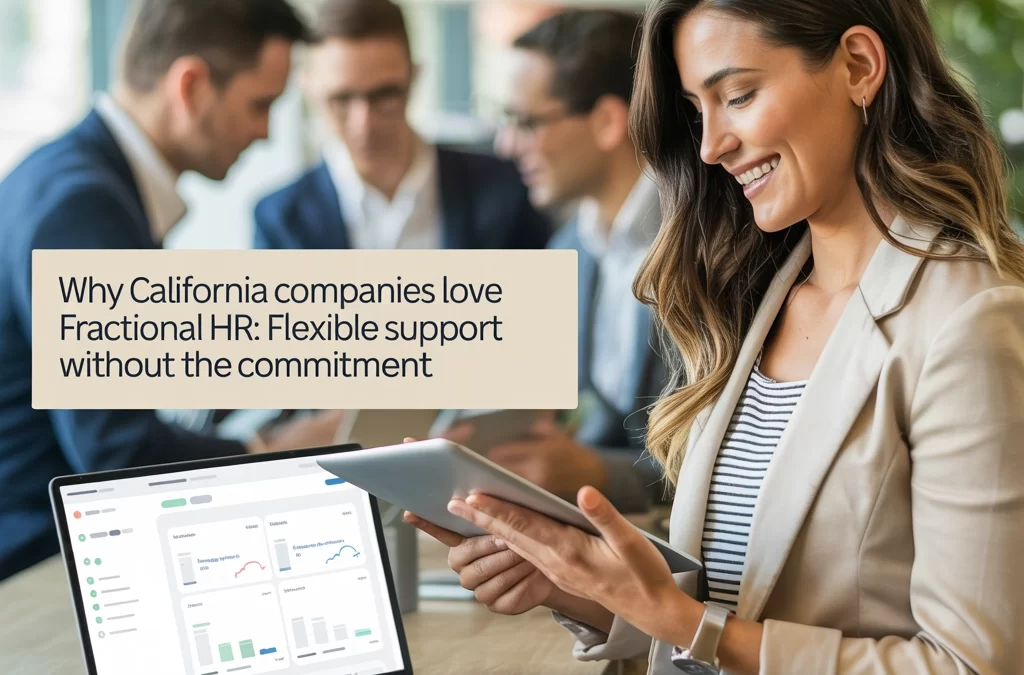
Why California Companies Love Fractional HR: Flexible Support Without the Commitment https://goldenstatehr.com/why-california-companies-love-fractional-hr-flexible-support-without-the-commitment/?utm_source=rss&utm_medium=rss&utm_campaign=why-california-companies-love-fractional-hr-flexible-support-without-the-commitment Thu, 14 Aug 2025 16:59:12 +0000 https://goldenstatehr.com/?p=254 If you own or run a business in California, you already know: rules shift fast, employees expect more, and that handbook you wrote in 2016 is now as outdated as an iPhone 5. Enter the rise of the Fractional HR partner—a proven way to get expert-level HR firepower, exactly when you need it, without shackling […]

The post Why California Companies Love Fractional HR: Flexible Support Without the Commitment appeared first on Golden State HR.

]]>
If you own or run a business in California, you already know: rules shift fast, employees expect more, and that handbook you wrote in 2016 is now as outdated as an iPhone 5. Enter the rise of the Fractional HR partner—a proven way to get expert-level HR firepower, exactly when you need it, without shackling yourself to the overhead of another full-time hire. Let’s break down why so many California businesses are ditching tradition for a smarter option.


1. Why “Good Enough” HR Is Never Good Enough in California

Let’s start with a reality check: California’s employment laws are a maze designed by lawyers (for lawyers). Even companies with the best intentions can accidentally run afoul of new rules about pay transparency, meal and rest breaks, or the ever-evolving definition of “independent contractor.” Missing a single compliance box can lead to six-figure headaches—sometimes for something as simple as an out-of-date form.

Fractional HR means you have access to pros who keep their heads in the regulatory game for a living. They aren’t juggling five different job hats or learning HR from YouTube. They’re following Sacramento’s legislative dramas, tracking court interpretations, and helping you avoid being next week’s cautionary tale.

image_1


2. Real Cost Savings (Without Cutting Corners)

The do-it-yourself method can look smart on paper: assign HR to your office admin or hire someone part-time. But when real issues crop up—say, a wage claim or harassment complaint—suddenly the “savings” vanish behind lawyer bills and lost time.

Fractional HR lets you only buy what you use. No salary, no benefits, no “Wellness Wednesdays” budget needed. Just pay for solutions, not hours at a desk. Small and mid-size companies can finally afford experienced guidance usually reserved for big enterprise, with zero guilt trips about keeping someone “busy.”

And because these HR professionals are consultants, they’re focused on delivering outcomes, not dragging out process for job security. That’s the kind of efficiency that actually hits your bottom line—in a good way.


3. Flexibility That Grows (or Shrinks) With You

If you’re scaling up, navigating layoffs, rolling out remote work, or facing a wave of new hires, your HR needs shift—sometimes overnight. Fractional HR is built for this reality. Adjust your level of support project-to-project: get deep help when launching a performance management system, tap lighter touch for monthly compliance check-ins, or bring in specialists for thorny investigations.

No need for awkward “downsize” conversations. No endless ramp-up period, hoping someone “picks it up as they go.” Fractional HR adapts at your pace, so you get just the right fit. The result? More resilience, fewer blind spots, and zero wasted spend.


4. Hard-Hitting Expertise—with None of the Fluff

Let’s be blunt: many full-time HR folks at smaller companies are stretched thin, juggling payroll, compliance, hiring, and “please fix the printer” calls. Fractional HR brings in specialists who actually like HR puzzles—and have solved them before, in your industry and in California’s legislative climate.

We’re talking real analysis, practical guidance, and policies that protect, not just impress auditors. Plus, you skip the expense (and ego risk) of hiring a 20-year HR vet when you only need them a few hours a month.

In the best cases, your fractional pro will call out weak spots you never even knew existed—before they cost you in fines or employee drama.

image_2


5. Competing for Talent (When Everyone Wants a Unicorn)

Want to attract people in tech, health care, entertainment, or pretty much any field in California? You need more than pizza parties and a ping-pong table. Fractional HR pros know how to craft recruitment messaging, total rewards statements, and onboarding programs that actually move candidates—while keeping you out of employer branding trouble.

Even better, they’ll help design retention strategies that matter: career growth talks, feedback systems, and yes, making sure your pay practices don’t wind up as tomorrow’s viral LinkedIn post. That’s huge in a state where word travels fast (and lawsuits travel faster).


6. Short-Term Projects, Lasting Impact

Sometimes you don’t need ongoing HR support—but you do need an expert for the next “big leap.” Fractional HR is perfect for those:

  • Launching your first Employee Handbook? Get it drafted and rolled out right, fast.
  • Reacting to a sudden compliance change? Get policy updates before Monday.
  • Rolling out performance reviews or new benefits? Pull in specialized help for the setup, then take it in-house.

You pay for the value received, not for someone to “find enough work” to justify full-time employment.


7. Zero Drama—Total Professionalism

Would you rather field HR drama internally, or leave it to someone trained to handle tough conversations, sensitive investigations, and employee conflicts? Fractional HR pros don’t get caught in company gossip or office politics—they’re there to solve problems, not create them.

That professional distance can make all the difference in resolving disputes quickly and confidentially. Trust us—sometimes the hardest truth is best delivered by someone who doesn’t share your coffee machine.

image_3


The Golden State HR Approach (How We Do Fractional HR)

At Golden State HR, we’ve seen the pitfalls of California’s labor landscape up close. Our fractional HR services are built for flexibility, transparency, and results. We can:

  • Conduct a free HR assessment so you know your risk—no sales pitch, just a real-world snapshot.
  • Map out a project plan to eliminate risk, close gaps, and strengthen culture.
  • Plug into your team with as much (or as little) support as you want, specializing in California compliance, culture building, and talent management.

We believe small and mid-sized California companies deserve Fortune 500-level HR, without the Fortune 500 commitment.

Ready to stop rolling the dice? Reach out for your free assessment at goldenstatehr.com/contact and we’ll show you how fractional HR delivers results—without strings attached.


Bottom Line: Fractional HR gives California business owners and leaders an edge—turning compliance headaches, culture challenges, and talent wars into manageable, even enjoyable, wins. Why settle for “good enough” when you can have flexible, expert support right when and where you need it?

Want to see how your business stacks up? Contact us today.

The post Why California Companies Love Fractional HR: Flexible Support Without the Commitment appeared first on Golden State HR.

]]>
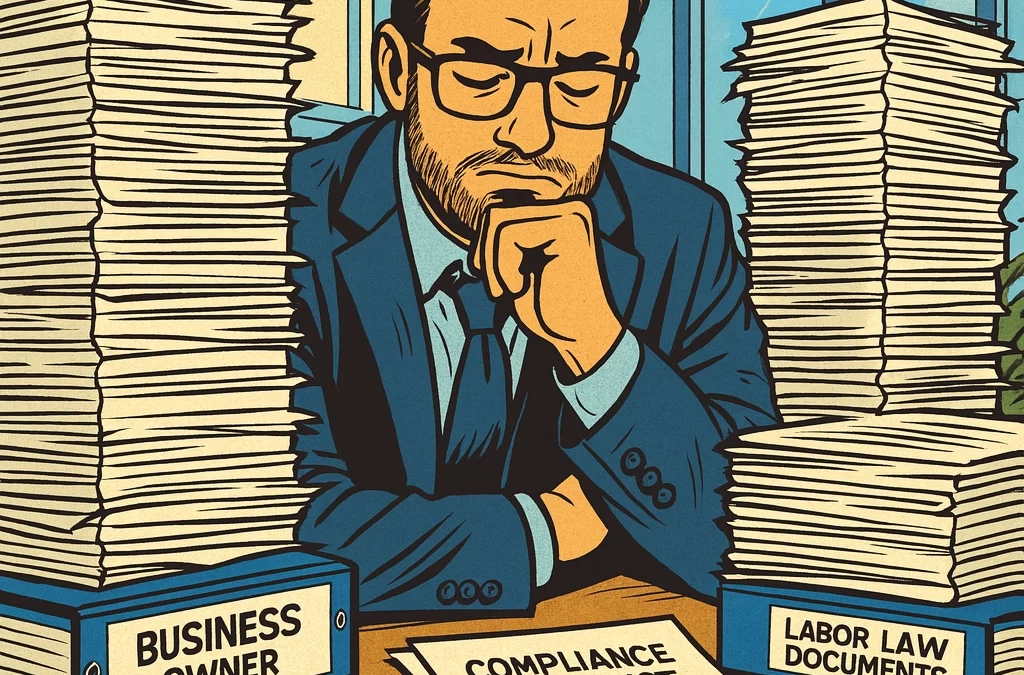
The Real Risks of California Labor Code Noncompliance for Small Businesses: Why Goodwill Isn’t Enough https://goldenstatehr.com/the-real-risks-of-california-labor-code-noncompliance-for-small-businesses-why-goodwill-isnt-enough/?utm_source=rss&utm_medium=rss&utm_campaign=the-real-risks-of-california-labor-code-noncompliance-for-small-businesses-why-goodwill-isnt-enough Mon, 11 Aug 2025 18:35:26 +0000 https://goldenstatehr.com/?p=251 “We’re Like Family”—But Is That Enough? For many California business owners, especially those running companies with fewer than 200 employees, the workplace often feels like a close-knit tribe. It’s common to share jokes at lunch, pitch in when things get tough, and celebrate wins together. You know your staff’s kids’ names, and they know yours. […]

The post The Real Risks of California Labor Code Noncompliance for Small Businesses: Why Goodwill Isn’t Enough appeared first on Golden State HR.

]]>

“We’re Like Family”—But Is That Enough?

For many California business owners, especially those running companies with fewer than 200 employees, the workplace often feels like a close-knit tribe. It’s common to share jokes at lunch, pitch in when things get tough, and celebrate wins together. You know your staff’s kids’ names, and they know yours.

Understandably, it’s tempting to believe that this goodwill—this foundation of trust—will protect you from legal problems. Why would someone you’ve helped for years turn around and sue you, right?

Unfortunately, the reality of California’s labor code doesn’t care about good intentions. Even with the best relationships, legal and financial risks lurk everywhere. Violations, whether accidental or not, can lead to devastating consequences that goodwill can’t cover.

Let’s dig into why.

California Labor Law: A Complex (and Costly) Puzzle

No other state comes close to California’s tangle of workplace rules. There are over 1,000 different labor laws and regulations you have to know, spanning everything from employee classification and minimum wage to required trainings, wage statements, and medical leave policies. And every year, more get added or changed—just in 2023, 44 new employment laws were passed. image_1

This complexity means even skilled, well-meaning business owners can easily miss a compliance “checkbox.” A small oversight—like forgetting to provide a certain rest break or missing a wage statement detail—can open the door to significant fines and lawsuits.

In fact, the costs of staying up to date are climbing fast. The California Consumer Privacy Act (CCPA), which covers payroll data, has imposed nearly $9 billion in compliance burdens on small businesses since its passage. If you don’t have a dedicated HR or compliance pro on staff, it’s almost impossible to keep up.

Small Mistakes, Big Penalties: The Dollar Amounts Are Real

Here’s the scary part: The financial stakes of even minor missteps are higher than ever. In 2022 alone, the California Labor Commissioner’s Office secured over $320 million in wage-theft claims—an increase of 22% year-over-year. That money isn’t just coming from mega-corporations; plenty are small employers who “thought they were good.”

For example, here’s what noncompliance can look like for a company of under 200 people:

  • Missed Meal or Rest Breaks: Up to $4,000 per employee in penalties.
  • Late/Incorrect Wage Statements: Each error = $250 for the first violation and $1,000 for subsequent ones.
  • Minimum Wage Violations: Owing back pay plus interest, plus double damages.
  • Misclassifying Employees as Contractors: Liability for back pay, unpaid overtime, benefits, and more, often running into six figures.

Citations by labor regulators in California jumped 73% in the first quarter of 2025 alone, with minimum wage violations topping the list.

Ask yourself: Even if you trust your team, can you risk $100,000—or your entire business—on the hope that no one will sue?

Why "We’re Different" Isn’t a Safety Net

Let’s be honest: Small-business teams really are unique. Owners are often visible and accessible, and there’s usually a personal connection. But:

  • Your Goodwill Stops at the Law: No matter how solid your relationships are, one employee who feels slighted, pressured by others, or advised by a lawyer to “do what’s best for your family” can turn your world upside down.
  • Personal Circumstances Change: A dispute over pay, a denial of a raise, or a life event that leaves someone desperate can make a lawsuit suddenly attractive.
  • Regulators Don’t Care About Trust: State agencies look at your labor law compliance, not your management style. Intentions are irrelevant during audits or investigations.

It’s About More Than Lawsuits

A single lawsuit can threaten your company’s future, but the risks go beyond that. Noncompliance also leads to:

  • Wage Claims and Class Actions: One minor wage violation can become a class action if others are affected, multiplying your exposure.
  • Audits and Investigations: State agencies can audit your records at any time—are you confident every file is in order?
  • Reputation Damage: Public records of noncompliance or settlements can harm your ability to recruit, retain clients, or get financing.

And with “predatory” lawsuits still commonplace in California—often designed to force quick settlements, not find justice—no company is too small to be targeted. image_2

“But I Have an HR Person…”

That’s a good start, but a single staffer can’t possibly keep up with California’s ever-shifting labor landscape. Constant legal changes, training requirements, and compliance deadlines require systematic processes, not just good people.

Consider this:

  • New minimum wage and exempt salary rules (now $16.50/hour and $68,640/year statewide, with cities going higher) mean payroll must adjust every January.
  • Sexual harassment prevention training is required for companies with just five employees.
  • Mandatory postings—from wage orders to family leave and pandemic-related laws—must be up at all times and updated whenever new laws pass.

If your team is busy just “getting the job done,” these administrative details often slip through the cracks.

Want to Know Where You Stand? Get a Free Compliance Risk Assessment

Here’s the good news: You don’t have to figure this out alone. At Golden State HR, we offer a free, basic assessment to help leaders of businesses with under 200 employees understand where they stand. We’ll check your policies, documentation, and recent compliance “hot spots” to highlight risks and opportunities without any pressure or obligation.

Best part? If you want, we can turn that assessment into a clear and simple project plan to address specific risks, fix policies, or get your paperwork locked down—whatever you need to sleep better at night. image_3

Let’s Make Compliance Work for You (Not Against You)

Running a business in California comes with enough stress. Don’t let the alphabet soup of state regulations, city ordinances, and labor code changes silently threaten your life’s work.

Strong relationships with your team are a huge advantage—but when it comes to compliance, they’re just not a safety net. The dollar amounts are too high, and the risks are too real.

To learn more or book your free risk assessment, get in touch with us at Golden State HR. We’ve helped California companies just like yours cut through the red tape, protect what they’ve built, and focus on growth instead of sleepless nights.

After all—what’s peace of mind worth to your business?


Interested in more insights about California employment law and HR best practices?
Check out our Risk Management blog for the latest tips, guides, and compliance updates.

The post The Real Risks of California Labor Code Noncompliance for Small Businesses: Why Goodwill Isn’t Enough appeared first on Golden State HR.

]]>
5 Funny Gen Z Habits You’ll Spot in the Modern Workplace https://goldenstatehr.com/5-funny-gen-z-habits-youll-spot-in-the-modern-workplace/?utm_source=rss&utm_medium=rss&utm_campaign=5-funny-gen-z-habits-youll-spot-in-the-modern-workplace Fri, 08 Aug 2025 20:40:52 +0000 https://goldenstatehr.com/?p=249 There’s a new generation at work and if you haven’t already noticed, Gen Z is rewriting the rulebook in ways no earnest HR handout could’ve predicted. Some of their quirks are bewildering, others are absolutely hilarious, but all of them serve as a bright orange flag that the workplace is evolving. If you’re struggling to […]

The post 5 Funny Gen Z Habits You’ll Spot in the Modern Workplace appeared first on Golden State HR.

]]>

There’s a new generation at work and if you haven’t already noticed, Gen Z is rewriting the rulebook in ways no earnest HR handout could’ve predicted. Some of their quirks are bewildering, others are absolutely hilarious, but all of them serve as a bright orange flag that the workplace is evolving. If you’re struggling to decode your newest assistant’s email or can’t quite figure out what that thousand-yard stare in reception means, you’re not alone. Pull up a chair and prepare for a reality check—and a good laugh—about five Gen Z habits you’ll absolutely spot in today’s office jungle.

1. Email Anxiety Syndrome: The Accidental Comedy of Modern Communication

Emailing is not just a task for Gen Z. It’s a performance. Some treat every message like they’re trying to land a job at the UN—others look like they typed it with oven mitts. Stats say 57 percent of this cohort are unsure how formal to be in emails, so you get wild variety: an email that starts with “Heyyyy,” proofread within an inch of its life, peppered with a dozen “Thanks,” and then staggeringly overwritten with “ASAP” in all caps somewhere in the sentence for that manager-pleasing urgency.

Let’s break down what actually happens:

  • Most aspire to default to “Thanks” as a signoff, because it’s polite and safe. Still, 10 percent won’t touch abbreviations, ever, because “informality feels like a trap.”
  • More than a third check email constantly, driven by FOMO. It’s not diligence—it’s existential dread that something important will slip through the cracks.
  • Sixty percent admit they use email to dodge actual conversations. Why risk a face-to-face when email lets you plot your every word?

The result? Every workday is a parade of typo anxiety, awkward greetings, and obsessively crafted signatures. Welcome to Gen Z’s digital stage. If you want to see true email overthinking, just ask a new hire to write to payroll.

image_1

2. Out-of-Office Messages with Bite

Where Boomers played it straight and Millennials tried to sound upbeat, Gen Z’s OOO messages are pure comedic gold. These masterpieces ooze honesty sometimes bordering on the existential. Exhibit A: “On vacation. Hoping to win the lottery and never return.” Or the direct threat: “Do not contact me while I’m on leave or I’ll report you to HR.” These aren’t jokes (well, not entirely)—they’re a signal that, for this generation, transparency is king even if it comes with a sting.

For HR, these messages are both an HR headache and a corporate culture clue. Gen Z wants work to be real, not rehearsed. That’s your canary in the coal mine if you’re clinging to last decade’s policies. Someone still got anxious about making their OOO “sound right,” but most don’t bother trying to pretty it up.

Tip for managers: If you can’t laugh at their honesty, you’ll struggle adapting at all.

3. The Gen Z Stare: Ice Cold and Utterly Authentic

If you step into the average break room and catch a twenty-something gazing into the void, don’t panic—they’re not mad or burned out. You’re witnessing the Gen Z Stare. It’s a blank, direct gaze that skips chit-chat, replaces small talk, and tells you, “I’m here, I’m real, and I’m not faking it for your comfort.”

This social maneuver isn’t laziness—it’s badge-of-honor authenticity. Gen Z is allergic to over-the-top customer service or performative greetings. In roles where the expectation is over-eager service, they flip the script and let silence do the heavy lifting. Sure, it baffles customers and disrupts colleagues’ banter, but it’s setting a new tone: less forced friendliness, more realness.

What does it mean for employers? It’s time to stop measuring “engagement” by who fakes the best smile. If your office relies on ritual hellos, don’t be shocked if Gen Z rewrites the script—literally by saying nothing at all.

4. Unsupervised Chaos: The TikTok Takeover & Office Mayhem

Leave a handful of Gen Z coworkers unsupervised and suddenly the office isn’t just running—it’s trending. Maybe you stumble across a spontaneous theme day (all hats, no explanation), a whiteboard war of dad jokes, or an HR “inspiration corner” that's been rebranded into a shrine for obscure memes.

What might look like chaos to traditionalists is really peak Gen Z creativity at work. These impromptu brainstorms, “productivity hacks,” and team collabs break up the 9-to-5 grind—and yes, sometimes come with a questionable charcuterie of hot chips and cold brew.

Sure, your classic motivational poster might get replaced with a printout of a GIF, but here’s the kicker: the work still gets done, usually with bonus laughs and a viral company TikTok (or at least a group selfie for Slack).

Manager pro-tip: If you insist on strict oversight, you’ll miss out. Build trust, loosen the reins, and you might just see your team’s creativity—and engagement—level up.

image_2

5. The Never-Ending Formality Confusion

Gen Z’s struggle over professionalism is real—and it’s hilarious. At 9 AM, a carefully worded client email goes out with textbook grammar. By 9:05, there’s a playful meme dropped in the Slack channel. At 10, a manager gets a calendar invite for a “vibe check.”

It isn’t just communication, either. Dress codes are open to wild interpretation. They’ll show up in sneakers with a blazer, or graphic tees paired with a tie, somehow blending post-ironic style with a complete disregard for “business casual.” Their default is to oscillate between formal and not—because they genuinely don’t know which lane to pick, and neither does most of the modern workplace.

You’ll witness many polite stutters in meetings (Did I say that too formally? Was that too casual?) and a continual quest for a playbook that doesn’t exist. The end result is a constant, low-key struggle to “get it right” with a side of self-aware comedy.

image_3

What’s the Punchline for Employers?

Here’s the uncomfortable truth: Gen Z now makes up nearly a third of the workforce and their spending power tips north of a trillion. They’re not a side story; they’re rewriting the main script. Every habit that looks odd—from their accidental email comedy to their blunt OOO honesty—is a signpost for what’s coming down the compliance and culture pipeline. Ignore it and your company starts to look geriatric fast.

To keep pace, you’ll need to move past eye-rolling and figure out how to use humor as a bridge. Build policies that match their appetite for authenticity, experiment with new internal comms playbooks, and—most importantly—be ready to learn from their weirdness. Sometimes the joke is that they’re just telling the truth everyone else was too polite to say.

If you want real results from your team, or you’re ready to update your HR strategy for the next generation, start by understanding what makes Gen Z tick. Their quirks aren’t a bug—they’re the new feature set.

For more on what actually works in today’s workplaces, visit Golden State HR. Let’s make the modern workplace somewhere everyone can laugh—and thrive.

The post 5 Funny Gen Z Habits You’ll Spot in the Modern Workplace appeared first on Golden State HR.

]]>