
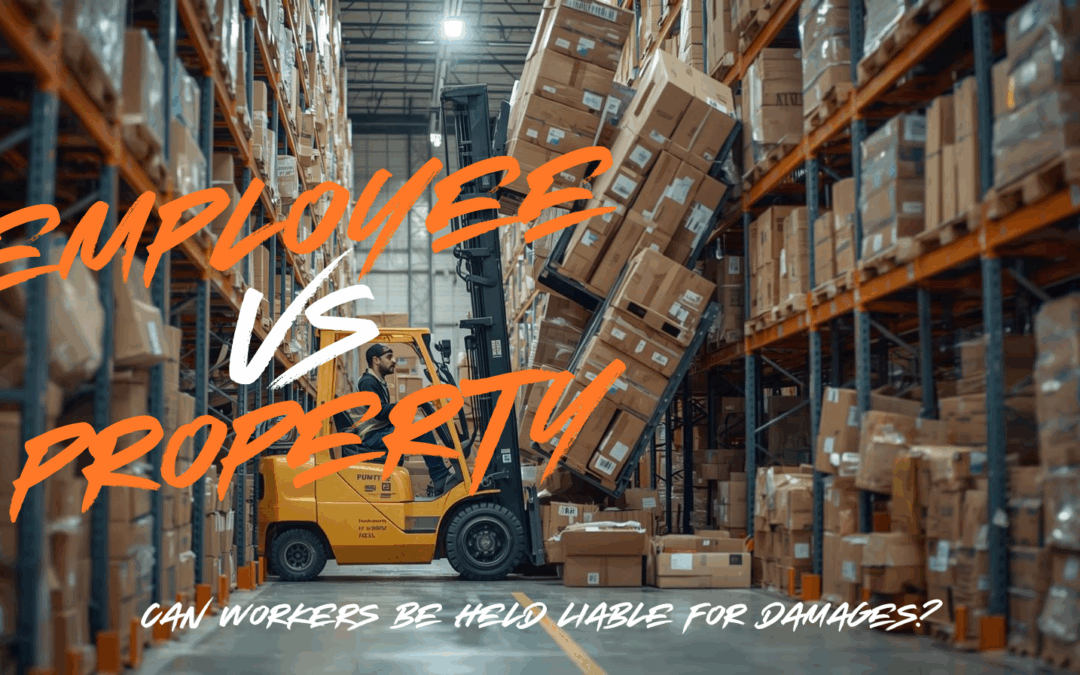
Picture this: Your warehouse employee accidentally backs the forklift into a support beam, causing $3,000 in damage. Your office manager spills coffee on the new laptop, frying the motherboard. Your delivery driver clips a mailbox while backing out of a tight driveway.
Now what? Can you make them pay for it?
If you're running a California small business, this question keeps many owners awake at night. The short answer? Sometimes, but it's way more complicated than you think, and the law heavily favors protecting workers from excessive financial liability.
Let's break down when employees can be held liable for property damage in California, when they can't, and how to handle these situations without landing yourself in legal hot water.
When Employees Are Typically NOT Liable
Here's the reality check most California employers need to hear: accidents happen, and they're usually your problem, not theirs.
Under California law, employees are generally protected from liability when damage occurs during normal work activities. If your warehouse worker drops a box and breaks something, or your admin accidentally deletes an important file, that's considered part of doing business, not grounds for making them pay.
The key legal principle here is that accidental damage without negligence rarely results in employee liability. California courts have consistently held that ordinary workplace mishaps fall under the employer's responsibility, especially when employees are acting within the scope of their job duties.

Think about it this way: you hired them to do a job, provided the training (hopefully), and put them in that situation. If they're genuinely trying to do their work and something goes wrong, that's on you as the business owner.
This protection is even stronger for lower-wage workers. California's employment laws recognize that requiring a minimum-wage employee to pay for a $2,000 mistake could create severe financial hardship, and that's not something the state takes lightly.
Common scenarios where employees typically aren't liable:
- Accidental drops, spills, or breakage during normal work
- Equipment malfunctions due to wear and tear
- Minor vehicle accidents during work-related driving
- Computer errors or data loss from normal use
- Damage from following standard procedures
When Employee Liability May Apply
Now, let's talk about the exceptions, because yes, there are times when employees can be held financially responsible for property damage in California.
Gross negligence is the big one. This goes beyond simple mistakes into "what were you thinking?" territory. If your employee ignores safety protocols, uses equipment they're not trained on, or takes actions that any reasonable person would know could cause damage, liability starts to shift.
Intentional damage is obvious: if someone deliberately destroys company property out of anger or spite, they're absolutely on the hook. But here's where it gets tricky: you need to prove intent, which isn't always as clear-cut as it seems.
Violation of clear company policies is another scenario where liability may apply. If you have written policies about equipment use, vehicle operation, or safety procedures, and an employee deliberately ignores them, resulting in damage, you may have grounds for recovery.

Examples where liability might stick:
- Using company vehicles for unauthorized personal trips that result in accidents
- Operating machinery under the influence of drugs or alcohol
- Deliberately ignoring safety lockout procedures
- Using equipment for purposes explicitly prohibited in training
- Destroying property during workplace altercations
But here's the catch: even in these situations, your ability to actually recover costs from employees is limited by California's wage and hour laws, which we'll cover next.
How Companies Should Respond: The Legal Minefield
When property damage happens, your response can make or break your legal position. Handle it wrong, and you could face wrongful termination claims, wage and hour violations, or discrimination lawsuits.
First, investigate before you react. Document everything: photos of damage, witness statements, equipment logs, training records. You need a clear picture of what happened before you decide on consequences.
Second, understand your wage deduction limitations. This is where many California employers get into trouble. Under both state and federal law, you cannot simply dock an employee's paycheck for property damage without meeting strict requirements.
The Fair Labor Standards Act (FLSA) prohibits any deductions that would drop an employee's pay below minimum wage. California goes even further: Labor Code Section 221 generally prohibits wage deductions unless specifically authorized by law or with explicit written employee consent.

Key legal requirements for wage deductions in California:
- Must be explicitly permitted in a written employment contract
- Cannot reduce pay below minimum wage
- Must be related to the employee's benefit (not just employer recovery)
- Require clear documentation of the damage and employee responsibility
Your response playbook should include:
- Immediate documentation of the incident and damage
- Investigation into circumstances and employee culpability
- Review of employment contracts for damage clauses
- Consultation with legal counsel before pursuing financial recovery
- Consideration of insurance coverage before pursuing employee liability
Remember: California employment penalties can be severe if you violate wage and hour laws while trying to recover property damage costs.
Prevention: Protecting Your Business AND Your Team
The smartest approach? Prevent these situations before they happen and create clear policies that protect both your business and your employees.
Clear policies are your first line of defense. Your employee handbook should explicitly outline expectations for equipment use, vehicle operation, and care of company property. But don't just write policies: train on them, document the training, and enforce them consistently.
Insurance should be your primary protection, not employee liability. Commercial general liability, workers' compensation, and commercial auto insurance should cover most property damage scenarios. It's far more cost-effective than trying to recover costs from employees who may not have the financial resources to pay anyway.

Smart prevention strategies include:
- Comprehensive training programs with documented completion
- Regular equipment maintenance to prevent malfunctions
- Clear consequences for policy violations (discipline, not necessarily financial liability)
- Incident reporting systems that encourage honesty over blame
- Insurance reviews to ensure adequate coverage for your specific risks
Create a culture of accountability without fear. Employees who are terrified of being financially responsible for every mistake are more likely to hide problems, lie about incidents, or quit rather than face potential liability. That's not the workplace culture you want.
Consider implementing progressive discipline policies that focus on correcting behavior rather than financial punishment. Sometimes a written warning is more effective (and legally safer) than trying to garnner wages.
The Bottom Line
Employee property damage liability in California is a complex area where employment law, wage and hour regulations, and practical business needs collide. While employees can sometimes be held liable for property damage, the circumstances are limited, the legal requirements are strict, and the practical recovery is often difficult.
Your best strategy? Focus on prevention, maintain comprehensive insurance coverage, and handle incidents with clear policies and legal compliance. When damage does occur, investigate thoroughly, document everything, and consult with employment law experts before pursuing financial recovery from employees.
The cost of getting this wrong: wrongful termination lawsuits, wage and hour violations, or regulatory penalties: often exceeds the value of the damaged property. Smart California employers protect their businesses through insurance and prevention, not by making their employees pay for every workplace accident.
Need help creating bulletproof policies for property damage and employee liability? Our HR experts help California businesses navigate these complex employment law issues every day. Don't let a property damage incident turn into a costly legal battle.