“We’re Like Family”—But Is That Enough?
For many California business owners, especially those running companies with fewer than 200 employees, the workplace often feels like a close-knit tribe. It’s common to share jokes at lunch, pitch in when things get tough, and celebrate wins together. You know your staff’s kids’ names, and they know yours.
Understandably, it’s tempting to believe that this goodwill—this foundation of trust—will protect you from legal problems. Why would someone you’ve helped for years turn around and sue you, right?
Unfortunately, the reality of California’s labor code doesn’t care about good intentions. Even with the best relationships, legal and financial risks lurk everywhere. Violations, whether accidental or not, can lead to devastating consequences that goodwill can’t cover.
Let’s dig into why.
California Labor Law: A Complex (and Costly) Puzzle
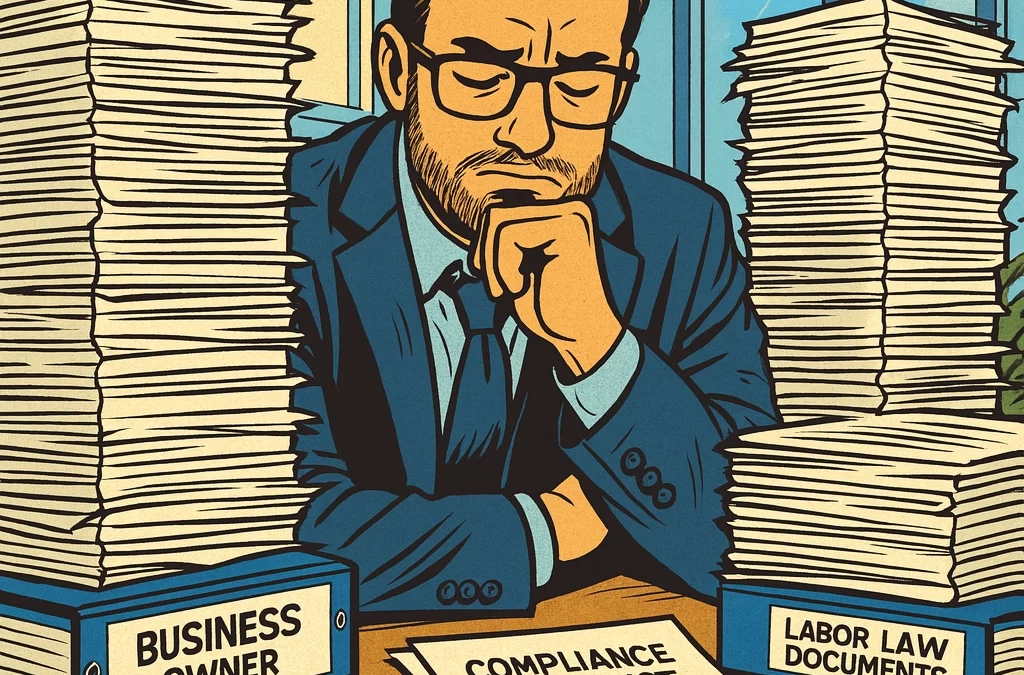
No other state comes close to California’s tangle of workplace rules. There are over 1,000 different labor laws and regulations you have to know, spanning everything from employee classification and minimum wage to required trainings, wage statements, and medical leave policies. And every year, more get added or changed—just in 2023, 44 new employment laws were passed. 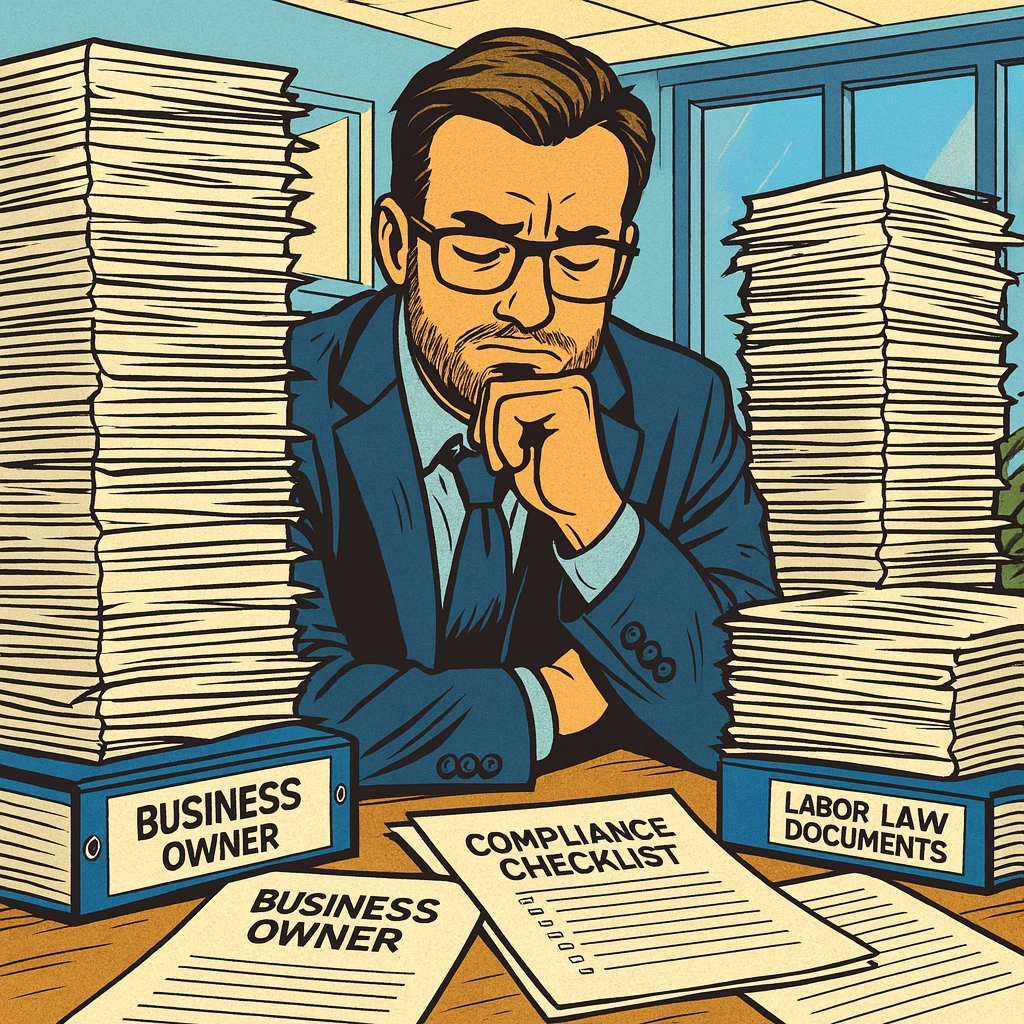
This complexity means even skilled, well-meaning business owners can easily miss a compliance “checkbox.” A small oversight—like forgetting to provide a certain rest break or missing a wage statement detail—can open the door to significant fines and lawsuits.
In fact, the costs of staying up to date are climbing fast. The California Consumer Privacy Act (CCPA), which covers payroll data, has imposed nearly $9 billion in compliance burdens on small businesses since its passage. If you don’t have a dedicated HR or compliance pro on staff, it’s almost impossible to keep up.
Small Mistakes, Big Penalties: The Dollar Amounts Are Real
Here’s the scary part: The financial stakes of even minor missteps are higher than ever. In 2022 alone, the California Labor Commissioner’s Office secured over $320 million in wage-theft claims—an increase of 22% year-over-year. That money isn’t just coming from mega-corporations; plenty are small employers who “thought they were good.”
For example, here’s what noncompliance can look like for a company of under 200 people:
- Missed Meal or Rest Breaks: Up to $4,000 per employee in penalties.
- Late/Incorrect Wage Statements: Each error = $250 for the first violation and $1,000 for subsequent ones.
- Minimum Wage Violations: Owing back pay plus interest, plus double damages.
- Misclassifying Employees as Contractors: Liability for back pay, unpaid overtime, benefits, and more, often running into six figures.
Citations by labor regulators in California jumped 73% in the first quarter of 2025 alone, with minimum wage violations topping the list.
Ask yourself: Even if you trust your team, can you risk $100,000—or your entire business—on the hope that no one will sue?
Why "We’re Different" Isn’t a Safety Net
Let’s be honest: Small-business teams really are unique. Owners are often visible and accessible, and there’s usually a personal connection. But:
- Your Goodwill Stops at the Law: No matter how solid your relationships are, one employee who feels slighted, pressured by others, or advised by a lawyer to “do what’s best for your family” can turn your world upside down.
- Personal Circumstances Change: A dispute over pay, a denial of a raise, or a life event that leaves someone desperate can make a lawsuit suddenly attractive.
- Regulators Don’t Care About Trust: State agencies look at your labor law compliance, not your management style. Intentions are irrelevant during audits or investigations.
It’s About More Than Lawsuits
A single lawsuit can threaten your company’s future, but the risks go beyond that. Noncompliance also leads to:
- Wage Claims and Class Actions: One minor wage violation can become a class action if others are affected, multiplying your exposure.
- Audits and Investigations: State agencies can audit your records at any time—are you confident every file is in order?
- Reputation Damage: Public records of noncompliance or settlements can harm your ability to recruit, retain clients, or get financing.
And with “predatory” lawsuits still commonplace in California—often designed to force quick settlements, not find justice—no company is too small to be targeted. 
“But I Have an HR Person…”
That’s a good start, but a single staffer can’t possibly keep up with California’s ever-shifting labor landscape. Constant legal changes, training requirements, and compliance deadlines require systematic processes, not just good people.
Consider this:
- New minimum wage and exempt salary rules (now $16.50/hour and $68,640/year statewide, with cities going higher) mean payroll must adjust every January.
- Sexual harassment prevention training is required for companies with just five employees.
- Mandatory postings—from wage orders to family leave and pandemic-related laws—must be up at all times and updated whenever new laws pass.
If your team is busy just “getting the job done,” these administrative details often slip through the cracks.
Want to Know Where You Stand? Get a Free Compliance Risk Assessment
Here’s the good news: You don’t have to figure this out alone. At Golden State HR, we offer a free, basic assessment to help leaders of businesses with under 200 employees understand where they stand. We’ll check your policies, documentation, and recent compliance “hot spots” to highlight risks and opportunities without any pressure or obligation.
Best part? If you want, we can turn that assessment into a clear and simple project plan to address specific risks, fix policies, or get your paperwork locked down—whatever you need to sleep better at night. 
Let’s Make Compliance Work for You (Not Against You)
Running a business in California comes with enough stress. Don’t let the alphabet soup of state regulations, city ordinances, and labor code changes silently threaten your life’s work.
Strong relationships with your team are a huge advantage—but when it comes to compliance, they’re just not a safety net. The dollar amounts are too high, and the risks are too real.
To learn more or book your free risk assessment, get in touch with us at Golden State HR. We’ve helped California companies just like yours cut through the red tape, protect what they’ve built, and focus on growth instead of sleepless nights.
After all—what’s peace of mind worth to your business?
Interested in more insights about California employment law and HR best practices?
Check out our Risk Management blog for the latest tips, guides, and compliance updates.